
|
IN NEWS: Smart glasses highlight gaps in privacy laws
QUESTION: The proliferation of smart glasses, facial recognition and other ambient recording technologies could transform the nature of digital surveillance. Discuss the opportunities and risks associated with such technologies.
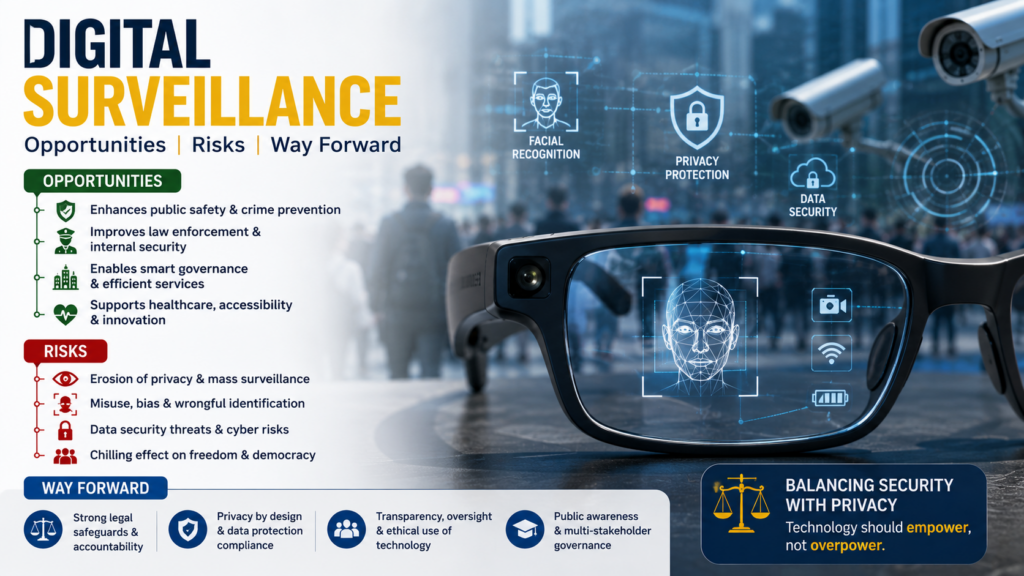
ANSWER: Ambient recording technologies—such as AI-enabled smart glasses, facial recognition systems (FRS), wearable cameras, and always-on sensors—represent the next phase of digital surveillance where data collection becomes continuous, passive, and often invisible. With AI integration, these technologies can identify individuals, analyse behaviour, translate conversations, and generate real-time intelligence. While they offer transformative benefits in governance, security, healthcare, and accessibility, they also raise profound concerns regarding privacy, civil liberties, and democratic accountability.
Digital surveillance is shifting from “surveillance through devices” to “surveillance embedded in everyday environments.”
What are Ambient Recording Technologies?
Examples
- Smart glasses (Meta-Ray Ban, Google Android XR glasses).
- Facial Recognition Systems (FRS).
- Body-worn cameras.
- AI-enabled CCTV networks.
- Voice assistants and wearable microphones.
- Internet of Things (IoT) sensors integrated with AI.
Opportunities Associated with Ambient Recording Technologies
1. Strengthening Public Safety and Crime Prevention
- Real-time identification of criminals and missing persons.
- Faster investigation through AI-assisted evidence collection.
- Crowd monitoring during large public events.
Example: Facial recognition used in airports and railway stations to identify wanted individuals.
2. Improved Law Enforcement and Internal Security
- Helps detect terror suspects and organised crime networks.
- Enhances border security through biometric verification.
- Assists disaster management by locating stranded individuals.
Example: India’s Automated Facial Recognition System (AFRS) proposed by NCRB.
3. Better Governance and Smart Cities
- Traffic management through intelligent cameras.
- Detection of accidents and emergency response.
- Monitoring public infrastructure and civic violations.
Example: AI-based traffic surveillance in Bengaluru and Delhi.
4. Accessibility and Social Inclusion
- Smart glasses assist visually impaired persons through object recognition.
- Real-time language translation and captioning improve communication.
- Navigation assistance for elderly persons.
5. Healthcare and Emergency Services
- Continuous monitoring of patients through wearable sensors.
- AI detects falls, cardiac emergencies, or unusual behaviour.
- Telemedicine support in remote regions.
6. Productivity and Innovation
- Hands-free access to information in manufacturing and logistics.
- Augmented Reality (AR) applications in education, defence, and medicine.
- Digital documentation in field inspections.
Risks Associated with Ambient Recording Technologies
1. Erosion of Privacy
- Continuous recording without explicit consent.
- Individuals may be monitored in public and semi-private spaces.
- Biometric information becomes permanently traceable.
2. Mass Surveillance and Chilling Effect
- Governments or corporations may monitor citizens continuously.
- Fear of being watched discourages free speech and peaceful protest.
- Impacts freedom of association and expression under Article 19.
Example: AI surveillance during public demonstrations globally.
3. Misuse of Facial Recognition Technology
- False positives may lead to wrongful arrests.
- Bias against women and minority communities due to skewed datasets.
- Lack of transparency in algorithmic decision-making.
4. Data Security and Cyber Risks
- Large biometric databases become attractive cyber targets.
- Identity theft through stolen facial or iris data.
- Deepfake generation using recorded facial information.
5. Corporate Surveillance and Commercial Exploitation
- Companies collect behavioural and location data for targeted advertising.
- Profiling consumers without meaningful consent.
- Surveillance capitalism monetises personal behaviour.
6. Ethical and Democratic Concerns
- Absence of informed consent.
- Function creep—data collected for one purpose used for another.
- Weak accountability mechanisms enable abuse of surveillance powers.
Constitutional and Legal Concerns in India
Right to Privacy
- Justice K.S. Puttaswamy (2017): Privacy recognised as a Fundamental Right under Article 21.
- Surveillance must satisfy legality, necessity, proportionality, and procedural safeguards.
Digital Personal Data Protection Act, 2023
- Protects personal digital data.
- Requires lawful processing and purpose limitation.
- However, exemptions for the State raise concerns regarding surveillance oversight.
Information Technology Framework
- IT Act and related rules regulate data handling.
- AI-specific regulation remains under development.
Key Ethical Challenges
- Consent: Individuals may not know recording is occurring.
- Autonomy: Behaviour changes under constant observation.
- Transparency: AI surveillance decisions are often opaque.
- Accountability: Difficult to identify responsibility for algorithmic errors.
- Equity: Biased datasets may disproportionately affect vulnerable communities.
Ambient recording technologies can significantly improve security, accessibility, governance, and public service delivery. However, without strong legal safeguards and ethical governance, they risk creating a pervasive surveillance ecosystem that undermines privacy, dignity, and democratic freedoms. India must adopt a rights-based, transparent, and accountable surveillance framework that balances technological innovation with constitutional values, ensuring that security does not come at the cost of liberty.
|
SOURCE: The Hindu e-paper – Smart glasses highlight gaps in privacy laws