
|
IN NEWS: Making India’s food system climate-proof cannot wait
QUESTION: “Crop diversification can simultaneously address the challenges of climate resilience, groundwater depletion and nutritional security in India.” Discuss.
(15 marks, 250 words)
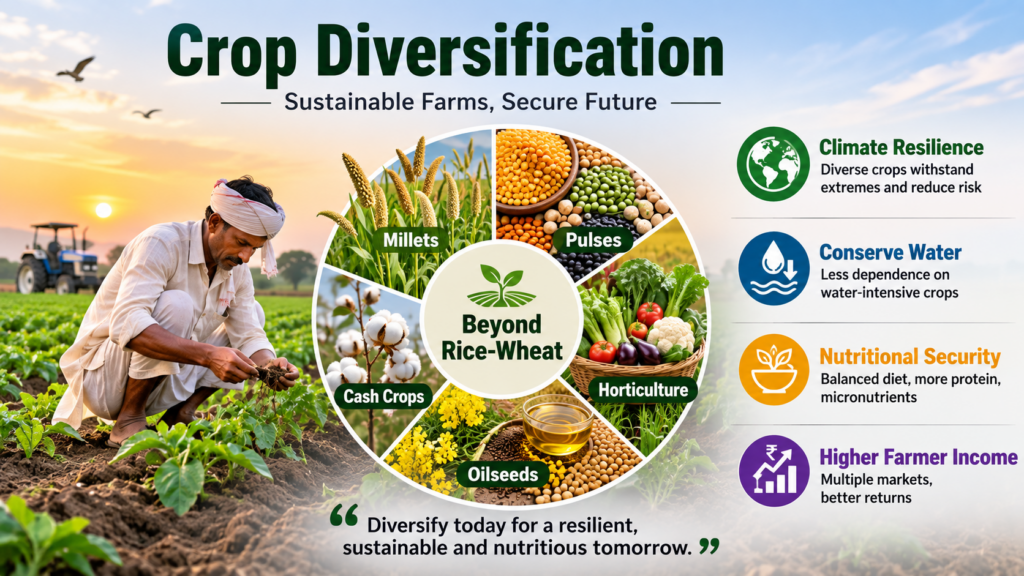
ANSWER: Crop diversification involves shifting from intensive single-crop monoculture—most notably the dominant paddy-wheat cycle—to a wider variety of crops such as pulses, millets, oilseeds, and horticultural produce. In the context of Indian agriculture, this shift acts as a multi-pronged intervention to mitigate ecological and socio-economic vulnerabilities.
- Enhancing Climate Resilience
- Buffer Against Extreme Weather: Monocultures are highly vulnerable to heatwaves, unseasonal rains, and pest outbreaks. Diversifying with indigenous and climate-resilient crops like sorghum (jowar), pearl millet (bajra), and finger millet (ragi) ensures farm survival during extreme climate events.
- Reduction of Carbon & Methane Footprints: Intensive paddy cultivation releases significant amounts of methane gas. Integrating pulses and legumes into crop rotations restores soil organic carbon and cuts greenhouse gas emissions.
- Biodiversity and Soil Health: Monocropping degrades soil microflora and structure. Rotating crops breaks pest cycles, restores soil nutrient balances naturally, and minimizes the need for chemical pesticides and fertilizers.
- Arresting Groundwater Depletion
- Breaking Water-Intensive Cycles: The Green Revolution incentivized water-intensive crops in naturally water-scarce regions (e.g., paddy in Punjab and Haryana, sugarcane in Maharashtra). Replacing water-guzzling crops with coarse grains reduces irrigation demand by 50% to 70%.
- Optimizing Virtual Water Usage: Rainfed crops like pulses and millets thrive on surface moisture and minimal rainfall, reducing over-reliance on tubewells and deep aquifer extraction.
- Natural Nitrogen Fixation: Leguminous crops (like chickpea, lentil, and pigeon pea) naturally fix atmospheric nitrogen, improving soil moisture-retention capacity and lessening the reliance on irrigation to wash in fertilizers.
- Achieving Nutritional Security
- Combating Hidden Hunger: India faces a dual burden of malnutrition and micronutrient deficiencies (anaemia, stunting). Moving away from cereal-heavy diets (rice and wheat) toward protein-rich pulses and micronutrient-rich millets directly addresses deficiencies in iron, zinc, and vitamins.
- Diversifying the Public Distribution System (PDS): Expanding procurement and distribution beyond rice and wheat under the National Food Security Act (NFSA) makes biofortified and traditional crops accessible to low-income populations.
- Dietary Diversity for Farmers: Small and marginal farmers often consume what they grow. Diversified homestead farming directly improves household dietary quality.
Key Institutional & Structural Challenges
- MSP Disincentives: The Minimum Support Price (MSP) system heavily favors paddy and wheat through assured government procurement, leaving pulses and millets vulnerable to market price volatility.
- Distorted Subsidies: Heavy subsidies on power, tubewells, and urea encourage farmers to stick with water-intensive monocultures despite ecological damage.
- Consumer Preference & Processing Gaps: Inadequate processing infrastructure, lack of organized supply chains, and consumer preference for refined cereals limit market demand for coarse grains.
Way Forward
To translate crop diversification into a widespread reality, policy must align procurement assurances with ecological goals. Expanding MSP procurement for non-cereal crops, re-orienting fertilizer and power subsidies toward sustainable practices, incentivizing micro-irrigation, and leveraging community-led initiatives like the International Year of Millets legacy will be essential to securing India’s agricultural future.
|