
|
IN NEWS: The ECI’s unfinished lessons
QUESTION: How does transparency in electoral processes contribute to free and fair elections? Discuss the role of the Election Commission of India in this regard. (10 Marks, 150 Words)
ANSWER: Transparency ensures that electoral processes are inclusive, verifiable and accountable, thereby strengthening public confidence in elections. It upholds universal adult suffrage under Article 326 and the voters’ right to information recognised under Article 19(1)(a).
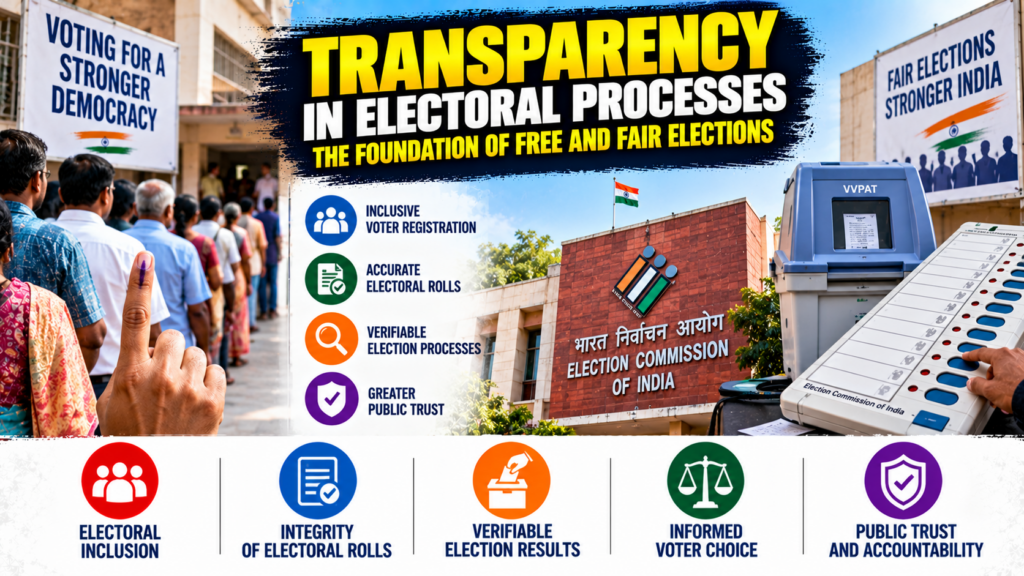
How does transparency contribute to free and fair elections?
- Electoral inclusion: Transparent voter registration and deletion procedures prevent wrongful exclusion, upholding Articles 325 and 326. Example: The Bihar SIR raised concerns over approximately 65 lakh names missing from the draft electoral roll.
- Electoral integrity: Verification of objections and deletion requests prevents electoral manipulation. Example: In Karnataka’s Aland constituency, the ECI rejected 5,994 incorrect Form 7 applications.
- Verifiability of election results: Disclosure of polling records and reconciliation of voter turnout figures enable independent scrutiny. Example: Differences between provisional and final turnout figures in Maharashtra’s 2024 Assembly election required clarification.
- Informed electoral choice: Disclosure of candidates’ criminal antecedents, assets and liabilities enables voters to make informed decisions, consistent with Article 19(1)(a).
- Public trust and accountability: Transparent decision-making reduces suspicion of political bias and enables scrutiny of the ECI’s actions.
Role of the Election Commission of India
Under Article 324, the ECI exercises superintendence, direction and control over electoral rolls and the conduct of elections.
- Electoral roll management: Sections 21- 23 of the RPA, 1950 provide for revision, correction and inclusion of names. The ECI must ensure proper verification, notice, hearings and opportunities to challenge wrongful deletion.
- Transparency in polling: The ECI provides Form 17C vote-count records to polling agents and employs EVM-VVPAT safeguards to facilitate verification.
- Enforcement of electoral fairness: The ECI enforces the Model Code of Conduct, while platforms such as cVIGIL enable citizens to report electoral violations.
- Public accountability: It must explain discrepancies in polling figures, facilitate lawful scrutiny of records and ensure effective grievance redressal.
Challenges and way forward
- Wrongful exclusions: Strengthen electoral roll verification, publish clear reasons for deletions and ensure time-bound appeals.
- Limited access to records: Improve access to election-related information while protecting voter privacy and ballot secrecy. Example: Concerns over the 2024 amendment to Rule 93 of the Conduct of Elections Rules, 1961.
- Institutional independence: Strengthen the ECI’s administrative and financial autonomy and transparency in appointments.
- Public distrust: Improve communication of electoral decisions through timely disclosure of verifiable information.
The credibility of elections depends not merely on the ECI’s constitutional authority but on its ability to ensure electoral inclusion, transparent procedures, verifiable outcomes and institutional accountability.
|