
|
IN NEWS: A ready solution to tackle anaemia
QUESTION: “The persistence of anaemia in India reflects not merely a nutritional deficit but also gaps in the design and delivery of public health interventions.” Examine. (150 words)
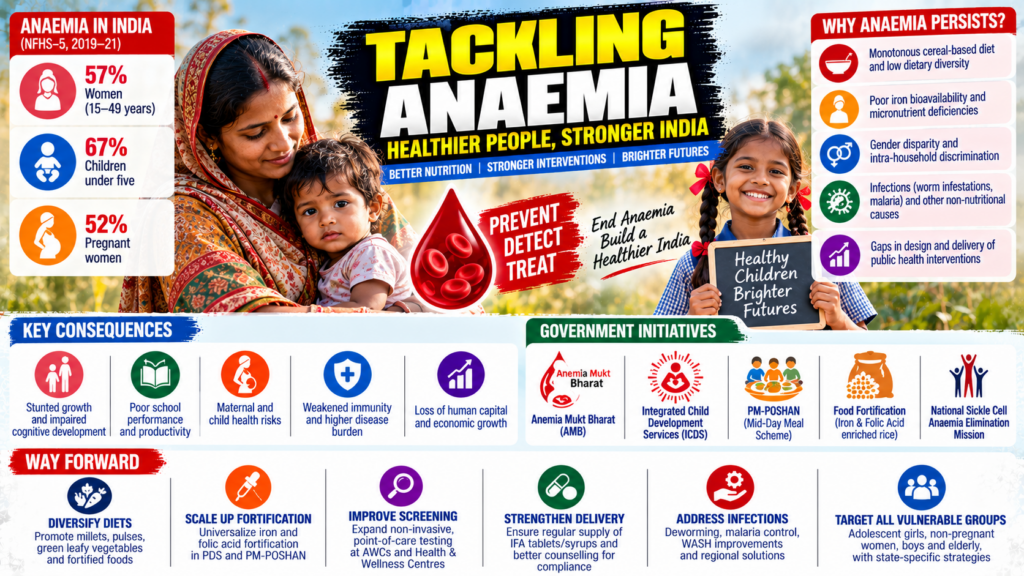
ANSWER: According to the National Family Health Survey (NFHS-5, 2019–21), anaemia prevalence in India stands at 57% among women of reproductive age (15–49 years), 67% among children under five, and 52% among pregnant women, reflecting a marginal deterioration compared to NFHS-4.
While historically framed as a dietary lack of iron, the stubborn persistence of anaemia demonstrates that it is a complex, systemic issue. It stems from a combination of nutritional gaps, design flaws in national health strategies, and last-mile operational failures in public health delivery.
1. Nutritional Deficits: The Biological and Socio-Economic Drivers
- Monotonous Cereal-Based Diets: High consumption of refined carbohydrates with minimal dietary diversity leads to inadequate intake of bioavailable iron, Vitamin B12, and folic acid.
- Poor Bioavailability & Inhibitors: Phytates present in high-cereal Indian diets inhibit non-heme iron absorption. Additionally, widespread deficiency in Vitamin C—necessary for iron absorption—compounds the deficit.
- Gender Disparity & Intra-Household Discrimination: Deep-rooted patriarchal social norms often result in women eating last and least, disproportionately affecting young girls and women of reproductive age.
- Triple Burden of Malnutrition: Anaemia frequently coexists with micronutrient deficiencies and maternal undernutrition, accelerating intergenerational cycles of stunted physical and cognitive development.
2. Gaps in the Design of Public Health Interventions
Public health policies, including Anemia Mukt Bharat (AMB) and the Integrated Child Development Services (ICDS), have made significant strides, yet structural design limitations persist:
- Over-Reliance on Pharmacological Iron Supplementation: Interventions rely heavily on the distribution of Iron and Folic Acid (IFA) tablets rather than systemic dietary diversification or biofortification.
- Narrow Demographic Targeting: Focus has historically centered on pregnant women and young children. Non-pregnant women, adolescent girls, adolescent boys, and elderly populations receive reduced programmatic attention despite high vulnerability.
- Inadequate Focus on Non-Nutritional Etiologies: Policy frameworks often under-address non-nutritional causes of anaemia, such as hookworm infestations, malaria, fluorosis, and genetic hemoglobinopathies (e.g., Sickle Cell Anemia and Thalassemia).
- One-Size-Fits-All Mandates: National guidelines often lack regional flexibility to address local dietary habits, cultural food taboos, or state-specific disease burdens.
3. Gaps in Delivery and Implementation Mechanisms
- Supply Chain Fragility & Stock-outs: Periodic stock-outs of IFA syrup, tablets, and testing kits at Anganwadi Centres (AWCs) and Primary Health Centres (PHCs) break compliance routines.
- Side-Effect Management & Poor Compliance: Gastrointestinal side-effects (nausea, constipation) associated with standard ferrous sulfate tablets lead to high drop-out rates. Frontline health workers often lack the training or time to provide proper compliance counseling.
- Diagnostic & Testing Deficits: Reliance on invasive, painful heel/finger-prick testing using digital hemoglobinometers faces resistance in field conditions. Non-invasive, real-time diagnostic tools are rarely available at the Point of Care (PoC).
- Synergy Deficits in WASH (Water, Sanitation, and Hygiene): Environmental enteropathy—caused by poor sanitation, open defecation, and contaminated drinking water—leads to chronic intestinal inflammation and impaired nutrient absorption, blunting the impact of IFA supplementation.
- Monitoring & Data Granularity Issues: Program evaluation often relies on input metrics (number of IFA tablets distributed) rather than outcome metrics (actual reduction in serum ferritin or hemoglobin levels).
4. Way Forward
- Shift from Supplementation to Food Systems Transformation:
- Accelerate mandatory food fortification (iron and folic acid enriched rice under the Public Distribution System (PDS) and PM-POSHAN).
- Promote dietary diversity by integrating pulses, millets (Shree Anna), and local green leafy vegetables into ICDS and Mid-Day Meal menus.
- Broaden Screening and Diagnostic Capacity:
- Scale up non-invasive, point-of-care digital hemoglobinometers at AWCs and Health and Wellness Centres (Ayushman Arogya Mandirs) under the Anemia Mukt Bharat strategy.
- Universalize testing for hemoglobinopathies, particularly in tribal belts under the National Sickle Cell Anemia Elimination Mission.
- Strengthen Last-Mile Delivery and Capacity Building:
- Empower Frontline Workers (ASHAs, Anganwadi Workers, ANMs) with standardized counseling toolkits to address side-effects, myths, and dietary practices.
- Implement real-time digital supply chain tracking (similar to CoWIN/U-WIN frameworks) to eliminate IFA stock-outs.
|
SOURCE: The Hindu epaper – A ready solution to tackle anaemia