
|
IN NEWS: Eyes on the road
QUESTION: What is the Safe System approach to road safety? How is it different from an approach that places primary responsibility on individual road users? (150 words)
ANSWER: The Safe System approach is a holistic road safety framework designed to eliminate fatal and serious injuries on transport networks. Standardized internationally by organizations like the World Health Organization (WHO) and the OECD, it fundamentally shifts responsibility from individual drivers to the systemic design of the road transport environment.
Core Principles of the Safe System Approach
- Human Fallibility: People will inevitably make mistakes and cause errors while using the road network.
- Human Physical Vulnerability: The human body has strict biological tolerance limits to kinetic force impact before death or severe injury occurs.
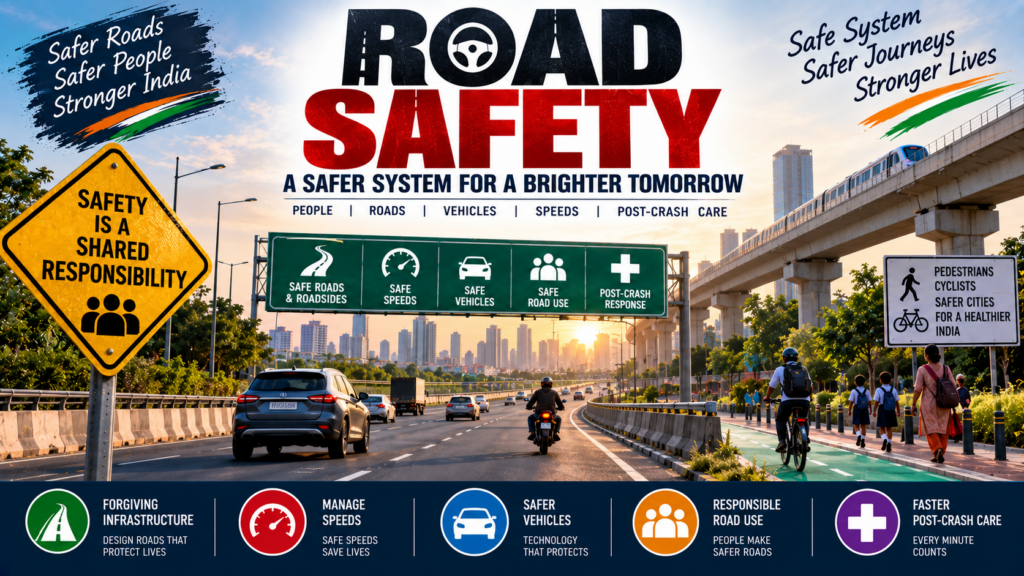
- Shared Responsibility: Safety is a shared duty among system designers (engineers, urban planners, policymakers, vehicle manufacturers) and system users.
- Systemic Redundancy: All components of the road network must work together so that if one part fails, other layers still protect the road user.
Key Pillars of Implementation
- Safe Roads & Roadsides: Designing infrastructure proactively to prevent crashes and soften impact, such as using roundabouts, median barrier separation, and segregated bike paths.
- Safe Speeds: Setting and enforcing speed limits matched to the physical protection levels of infrastructure and vehicles, such as capping speeds at 30 km/h in high-pedestrian zones.
- Safe Vehicles: Equipping vehicles with active and passive safety technologies, such as Autonomous Emergency Braking, lane-keep assist, and crash-tested crumple zones.
- Safe Road Use: Promoting compliant user behavior via education, licensing standards, and enforcement against high-risk behaviors like speeding and impaired driving.
- Post-Crash Response: Ensuring rapid emergency medical response, effective trauma care, and rehabilitation to minimize mortality and long-term disability.
Traditional vs. Safe System Approach
- Underlying Premise & Responsibility: The traditional approach places primary responsibility on individual road users, expecting them to act perfectly, abide strictly by rules, and avoid collisions. In contrast, the Safe System approach places primary responsibility on system designers—including engineers, urban planners, and lawmakers—to build an environment that accommodates human error.
- Goal & Target: The traditional approach aims to reduce the total frequency of crashes to an acceptable economic or social threshold. The Safe System approach targets zero fatalities and serious injuries (often known as “Vision Zero”), accepting that minor collisions may occur but ensuring that severe physical harm is engineered out of the transport system.
- Response to Human Error: The traditional approach views human error as the root cause of crashes and relies heavily on enforcement, traffic fines, and public education campaigns to discipline behavior. The Safe System approach treats human error as an inevitable reality, relying on forgiving infrastructure—such as rumble strips, roadside barriers, and speed management—so errors do not result in fatal kinetic energy transfers.
- Safety Interventions: The traditional approach often implements isolated measures reactively after specific high-crash locations (blackspots) are identified. The Safe System approach proactively integrates safety across all elements—roads, speeds, vehicles, and post-crash care—to create a multi-layered, redundant safety net across the entire network.
The Safe System approach represents a fundamental paradigm shift in road transport management. Rather than expecting human behavior to adapt flawlessly to a hazardous environment, it demands that the environment be designed to protect vulnerable human bodies from fatal kinetic forces. By combining forgiving infrastructure, manageable speeds, safe vehicles, and rapid post-crash care, the Safe System framework moves road safety from a model of individual fault and punishment to one of shared responsibility and systemic resilience.
|