
|
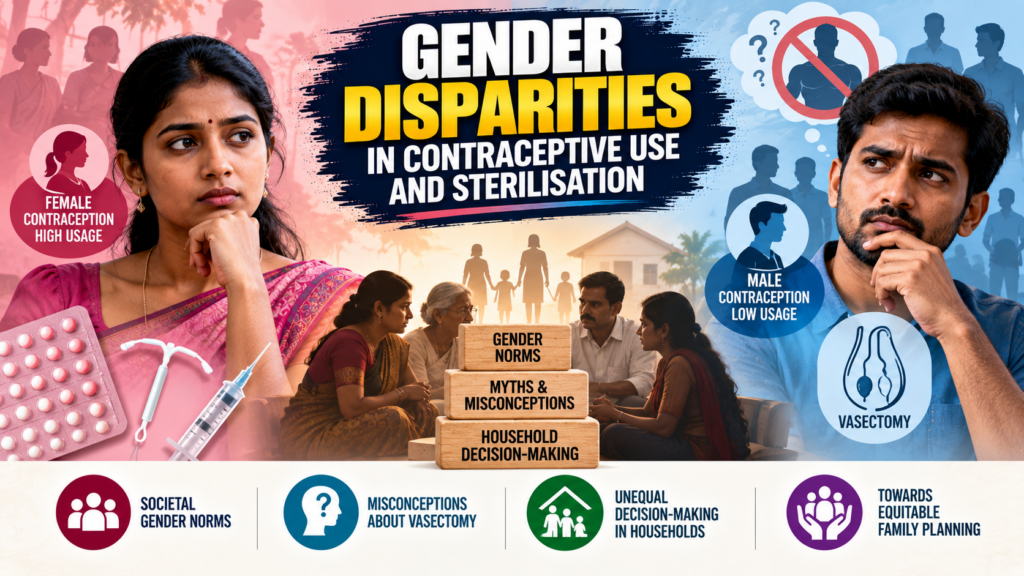
IN NEWS: Gender disparities in contraceptive use and sterilisation
QUESTION: Examine how gender norms, misconceptions surrounding vasectomy, and unequal decision-making within households influence contraceptive choices in India.
ANSWER: In India, the discourse surrounding family planning and reproductive health reflects a pronounced gender imbalance. Data from the National Family Health Survey-5 (NFHS-5) highlights a structural paradox: while India’s Total Fertility Rate (TFR) has dropped to replacement levels (2.0), the burden of family planning remains disproportionately borne by women. Female sterilization accounts for nearly 38% of all contraceptive use, whereas vasectomy accounts for less than 0.4%.
1. Gender Norms and the Feminization of Family Planning
- Paternalistic Masculinity and Provider Roles: Ideologies of masculinity often tie a man’s worth to physical strength, virility, and his role as the primary economic breadwinner. Contraceptive adoption, particularly surgical intervention, is perceived as a threat to this identity.
- Normalizing Female Suffering: Societal narratives frequently accept pain and medical procedures as natural aspects of womanhood (childbirth, menstruation). Consequently, female sterilization (tubal ligation)—a significantly more invasive surgical procedure requiring longer recovery times—is socio-culturally normalized over male sterilization.
- Stigma and Confidentiality Concerns: Women often seek covert contraceptive methods (such as injectable contraceptives or oral pills) due to social stigma, taking on the health burden in secret to avoid conflict with spouses or extended family.
2. Misconceptions and Myths Surrounding Vasectomy
- Conflation of Vasectomy with Castration or Impotence: A widespread fallacy equates No-Scalpel Vasectomy (NSV) with emasculation, loss of libido, or erectile dysfunction. The biological distinction between sperm transportation and testosterone production/ejaculation is poorly understood in community spaces.
- Fear of Loss of Physical Strength: In rural and working-class urban economies reliant on manual labor, men fear that a surgical procedure will permanently compromise their physical stamina, jeopardizing their earning potential.
- Historical Trauma of Forced Mass Sterilizations: The legacy of coercive mass sterilization drives during the Emergency era (1975–77) left a long-term institutional mistrust regarding state-sponsored male family planning camps, which continues to echo in rural public health perceptions.
- Public Health Infrastructure Deficits: Government family planning campaigns historically targeted women post-delivery in maternal healthcare settings, leading to a lack of trained male health workers (such as Accredited Social Health Activists or ASHAs being predominantly female) who can effectively counsel male community members.
3. Unequal Household Decision-Making and Autonomy
- Limited Female Reproductive Autonomy: NFHS-5 data shows that a significant proportion of married women in India do not have sole autonomy over their own healthcare choices, including when to have children or which birth control methods to use.
- Influence of Extended Family (In-Laws): In joint household setups, senior members—particularly mothers-in-law—exert considerable influence over family planning timelines, pushing for early childbearing and favoring male heirs (son preference). This structural pressure often delays or restricts a woman’s ability to negotiate space between pregnancies or adopt spacing methods like Intrauterine Devices (IUDs).
- Lack of Spousal Communication: Taboos surrounding sexual health and reproduction hinder open dialogue between married couples. Women often hesitate to ask partners to use barrier methods (condoms) due to fear of domestic friction, accusations of mistrust, or intimate partner violence.
Policy Imperatives and Strategic Interventions
- Targeted Male Engagement (Gender-Transformative Campaigns): Modernizing public health communication to frame male participation in family planning as a responsible, proactive choice rather than a loss of status.
- Strengthening Male Health Workforce Intermediaries: Recruiting and training male community health workers to address men directly in agricultural and workplace settings, dismantling myths regarding vasectomies.
- Incentive Alignment and Service Quality: Expanding access to No-Scalpel Vasectomy (NSV) at primary health centers with adequate financial compensation for lost wages, ensuring safe, dignified, and confidential care.
- Promoting Dual-Protection and Spacing Methods: Shifting the national focus away from terminal sterilization toward reversible spacing methods (injectables, IUDs, oral pills), allowing young couples greater agency in family planning timelines.
Achieving equitable family planning in India demands looking beyond reproductive health statistics to address the social structures governing them. As long as gender norms assign the sole burden of contraception to women and myths inhibit male participation, reproductive autonomy will remain constrained. A unified national effort prioritizing male engagement, comprehensive sex education, and equal spousal decision-making is essential to achieving true gender equity in reproductive choices.
|
SOURCE: The Hindu e-paper – Gender disparities in contraceptive use and sterilisation