
|
IN NEWS: Even as unemployment falls, lack of ‘decent work’ in India
QUESTION: “A decline in unemployment does not necessarily translate into an improvement in the quality of employment.” Discuss (15M 250 words)
ANSWER:
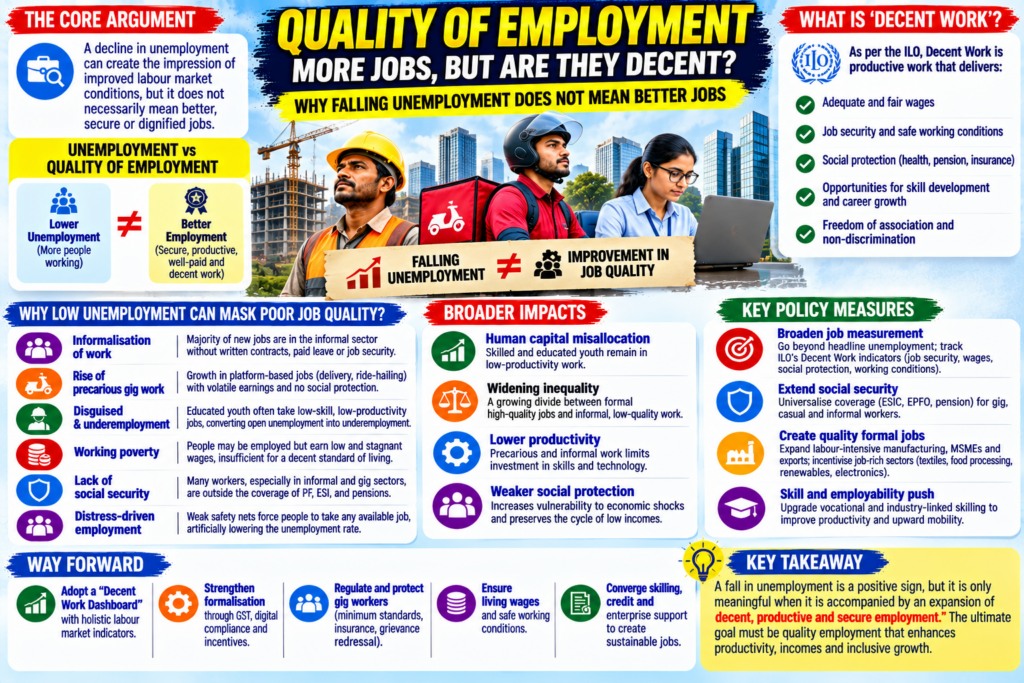
Why Low Unemployment Masks Poor Job Quality
- Informalisation of Work: Most job growth occurs in the informal sector, lacking written contracts, paid leave, or job security.
- Rise of Precarious Gig Work: Modern job creation is heavily driven by platform work (delivery, ride-hailing), where earnings are volatile and social protection is absent.
- Disguised & Underemployment: Educated youth often take low-skill, low-productivity jobs just to survive, turning open unemployment into underemployment.
- Working Poverty: A low unemployment rate does not guarantee living wages. High employment can coexist with wage stagnation and poor living standards.
- Lack of Social Security: A drop in unemployment numbers does not automatically mean workers have health insurance, provident fund benefits, or pensions.
- Distress-Driven Work: In developing economies, lack of safety nets forces people to take any available job, artificially lowering the unemployment rate.
Socio-Economic Impact
- Misallocates youth human capital and reduces productivity.
- Widens economic inequality between high-skilled formal workers and informal labor.
Key Policy Measures
- Move beyond basic employment numbers to track ILO Decent Work parameters.
- Extend social security benefits to gig, casual, and informal workers.
- Boost formal sector jobs by expanding labor-intensive manufacturing and MSMEs.
An economy achieving full employment through precarious, low-paying, and unsafe work remains economically fragile. Sustainable and inclusive growth requires shifting focus from merely creating jobs to generating high-productivity, secure, and dignified employment opportunities.
|
SOURCE: The Hindu epaper – Even as unemployment falls, lack of ‘decent work’ in India