
|
IN NEWS: The gaps in the implementation of the RTI Act
QUESTION:
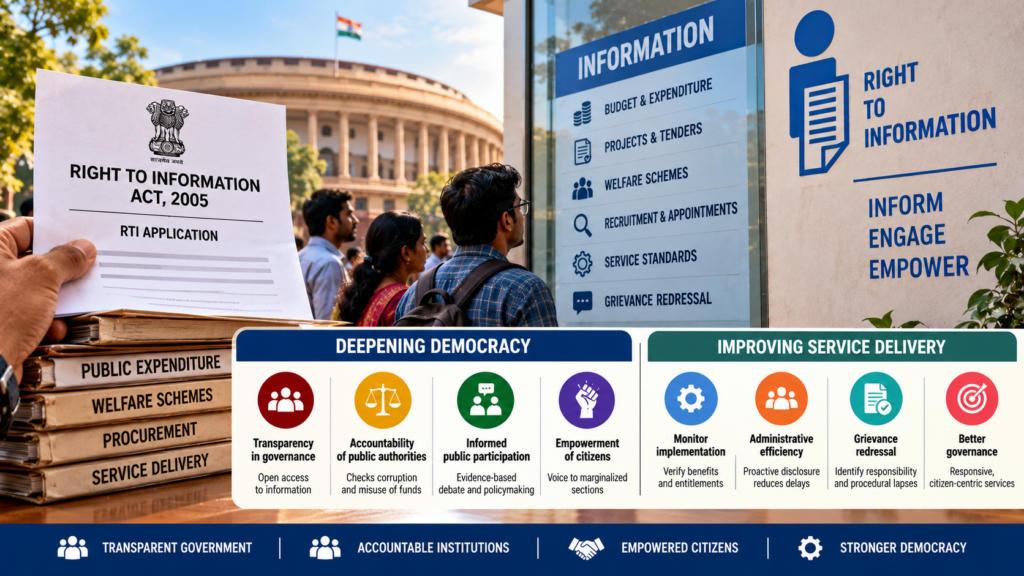
“The Right to Information is not merely a statutory mechanism for accessing records; it is an instrument for deepening democracy and improving service delivery.” Elaborate. (150 words, 10 marks)
ANSWER: The Right to Information (RTI) Act, 2005, operationalises the citizen’s right to seek information from public authorities and promotes transparency, accountability and participatory governance. It transforms citizens from passive recipients of government decisions into active participants in democracy.
Role in deepening democracy
- Transparency: Section 4 mandates proactive disclosure of information, reducing secrecy in public administration.
- Accountability: Citizens can scrutinise government expenditure, public procurement and the implementation of welfare schemes.
- Participatory governance: Access to information enables informed public debate and evidence-based participation in policymaking.
- Curbing corruption: Disclosure of official records can expose irregularities, favouritism and misuse of public funds.
- Empowerment: Marginalised communities can use information to demand their entitlements and hold authorities accountable.
Role in improving service delivery
- Monitoring implementation: Citizens can verify the delivery of pensions, ration benefits and other public services.
- Administrative efficiency: Proactive disclosure reduces repetitive RTI applications and administrative burdens.
- Grievance redressal: Information helps identify delays, responsibility and procedural failures.
- Better governance: Public scrutiny encourages officials to act transparently and respond to citizens’ needs.
Challenges and way forward
Weak implementation of Section 4, delays in information commissions and inadequate transparency audits undermine the Act’s effectiveness. Regular proactive disclosure, time-bound disposal of appeals, stronger institutional capacity and protection of RTI users are essential.
RTI strengthens democracy by making the government answerable to the people. Its effective implementation can transform transparency from a legal obligation into a culture of accountable, citizen-centric governance.
|
SOURCE: The Hindu epaper – The gaps in the implementation of the RTI Act