
|
IN NEWS: Overweight and weak
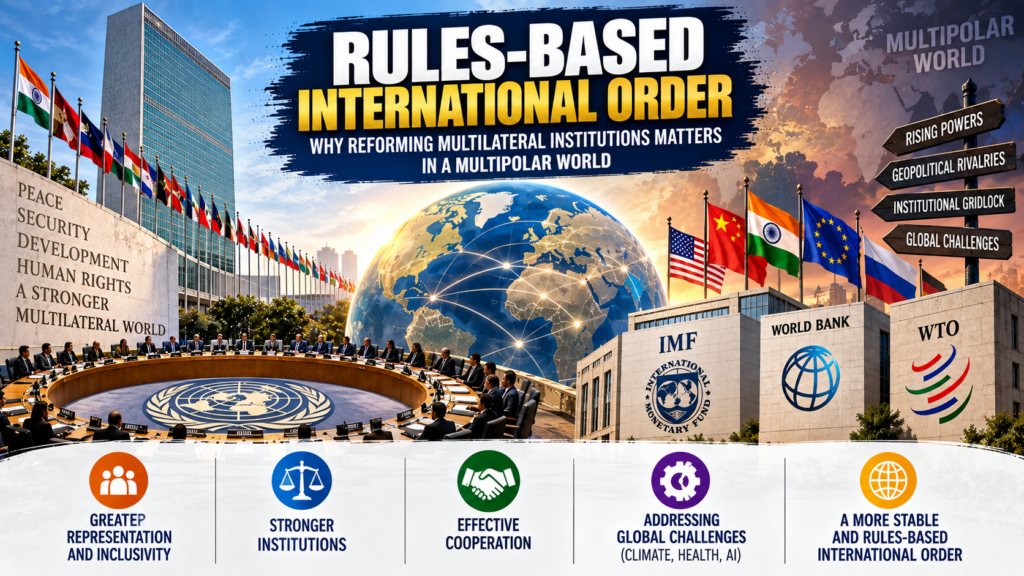
QUESTION: “Reforming multilateral institutions is essential for preserving a rules-based international order in an increasingly multipolar world.” Discuss the challenges to effective multilateralism and suggest measures to strengthen it.(250 words)
ANSWER: A rules-based international order relies on predictable, universally applicable norms and international law to govern relations between sovereign states. Formed largely in the aftermath of World War II around the United Nations, the Bretton Woods institutions (IMF and World Bank), and later the World Trade Organization (WTO), this governance architecture reflected a post-war, power distribution.
Context: Multipolarity and the Need for Reform
As power shifts from a unipolar or bipolar model to a multipolar world, geopolitical fragmentation rises. Reforming post-1945 multilateral institutions is necessary to:
- Reflect contemporary power balances: Ensuring rising Global South powers remain invested in global rules.
- Protect global public goods: Addressing climate change, health security, and AI governance requires coordinated action over unilateralism.
- Uphold international law: Ensuring rules and norms prevail over raw power politics.
Key Challenges to Multilateralism
- Representation Deficit: Core bodies like the UNSC, IMF, and World Bank reflect the geopolitical reality of 1945, leaving regions like Africa, Latin America, and Asia underrepresented.
- Veto Abuse and Gridlock: Strategic rivalries among major powers frequently paralyze the UN Security Council through veto abuse on critical security crises.
- Institutional Fragmentation: Disillusionment with global bodies drives states toward minilateral groups (e.g., QUAD, BRICS+) and parallel frameworks, risking normative fragmentation.
- Paralysis of the Trading System: The WTO’s Dispute Settlement Mechanism remains dysfunctional due to blocked judicial appointments, accelerating economic protectionism.
- Enforcement & Selective Adherence: International bodies lack enforcement mechanics, allowing major powers to selectively abide by international decisions and treaties.
Measures to Strengthen Multilateralism
- Restructure Security Governance: Expand UNSC permanent and non-permanent seats to include underrepresented regions, and restrict veto usage during mass human rights crises.
- Reform Global Financial Architecture: Reallocate IMF quotas and World Bank voting rights to match modern economic weights, while expanding accessible debt relief and climate finance.
- Revitalize the WTO: Restore the two-tier dispute settlement process and update global trade rules to cover digital commerce and green technologies.
- Network Global and Regional Bodies: Deepen cooperation between the UN and regional organizations (such as the African Union and ASEAN) to improve localized crisis response.
- Govern Emerging Frontiers: Establish binding global standards for AI, cybersecurity, and space, while strengthening WHO authority for future health emergencies.
Sustaining a rules-based order in a multipolar era requires shifting from outdated post-WWII structures toward representative, accountable, and enforceable global institutions.
|