
|
IN NEWS: Ways to conquer plastic waste and produce useful materials
QUESTION: What is plastic pyrolysis? Explain its potential as a waste-management and energy-generation technology. (150 words)
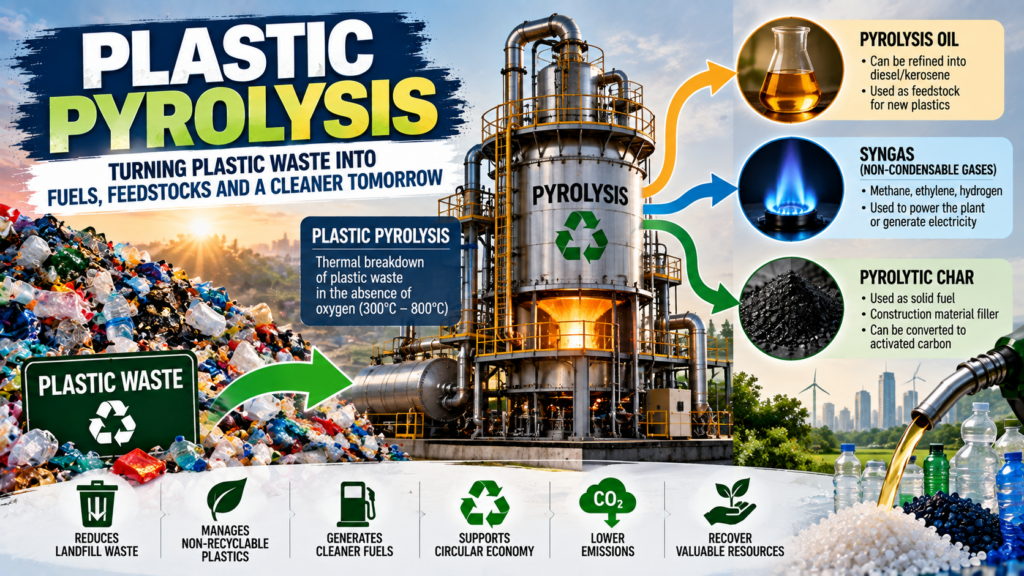
ANSWER: Plastic pyrolysis is a thermal degradation process in which post-consumer plastic waste is decomposed at elevated temperatures (typically between 300°C and 800°C) in the complete absence of oxygen. Unlike conventional incineration, which burns waste to release heat and carbon emissions, pyrolysis breaks the long-chain polymer bonds of plastics into simpler, shorter hydrocarbon molecules without combustion.
Key Products of Plastic Pyrolysis
- Pyrolysis Oil (Bio-crude / Synthetic Oil): The primary liquid condensate, rich in hydrocarbons, which can be refined into transportation fuels (like diesel or kerosene) or used as a chemical feedstock to produce new virgin-quality plastics.
- Non-Condensable Gases (Syngas): A gaseous mixture consisting mainly of methane, ethylene, hydrogen, and carbon monoxide, which can be recirculated to power the pyrolysis reactor itself or harvested for electricity generation.
- Pyrolytic Char: A solid carbonaceous residue that can be utilized as a low-grade solid fuel, a filler in construction materials, or upgraded into activated carbon.
Potential as a Waste-Management Technology
- Tackling Non-Recyclable and Mixed Plastics: Conventional mechanical recycling is limited to clean, single-type plastics (like PET or HDPE). Pyrolysis can process difficult-to-recycle, contaminated, multi-layered, and mixed plastic waste that otherwise ends up in landfills or ocean ecosystems.
- Advancing a Circular Economy: By converting end-of-life plastic back into chemical feedstocks (pyrolysis oil), the process enables “chemical recycling.” This allows plastics to be endlessly remanufactured into high-value, food-grade materials without quality degradation over successive cycles.
- Diverting Waste from Landfills and Incinerators: Pyrolysis significantly reduces the volume of solid municipal waste going into open dumps or landfills, mitigating groundwater leaching, soil toxicity, and microplastic contamination.
- Lowering Greenhouse Gas Emissions: Compared to open burning or municipal incineration, pyrolysis operates in a closed system, trapping heavy carbon emissions and preventing the release of toxic airborne pollutants like dioxins and furans when properly managed.
Potential as an Energy-Generation Technology
- High-Yield Energy Carrier Output: Plastic waste is derived from petrochemicals and possesses a high calorific value. Pyrolysis converts high-density energy trapped in plastic waste into liquid synthetic fuels with energy content comparable to commercial diesel and heavy fuel oils.
- Self-Sustaining Energy Loop: The non-condensable syngas generated during the process can be piped back into the plant’s combustion chamber. This makes the pyrolysis system partially or fully energy self-sufficient (parasitic load reduction).
- Grid Support and Decentralized Power: Pyrolysis oil and purified syngas can drive industrial boilers, heavy diesel generators, or gas turbines to generate off-grid electricity, providing decentralized energy solutions for remote areas or industrial clusters.
- Alternative to Fossil-Fuel Extraction: Utilizing plastic-derived fuels reduces the immediate demand for virgin crude oil extraction, lowering the overall carbon footprint associated with conventional fossil fuel refining.
Challenges and Operational Constraints
- Sensitivity to Feedstock Contamination: Presence of non-plastic materials, moisture, or PVC (which releases corrosive hydrochloric acid) can degrade product quality, damage reactor linings, and require expensive pre-sorting and pre-treatment steps.
- High Capital and Operational Costs: Scaling chemical recycling plants requires significant initial capital investment, sophisticated catalyst management, and precise temperature controls.
- Environmental Control Risks: Inadequate gas scrubbing can lead to the emission of hazardous volatile organic compounds (VOCs) and polycyclic aromatic hydrocarbons (PAHs).
Plastic pyrolysis serves as a critical bridge between environmental management and energy recovery. By converting persistent, low-value plastic waste into valuable hydrocarbon fuels and feedstocks, it aligns directly with global sustainability goals. Overcoming technological hurdles through effective sorting, efficient catalysis, and strict regulatory controls will be key to unlocking its full potential in a zero-waste, circular economy.
|
SOURCE: The Hindu e-paper – Ways to conquer plastic waste and produce useful materials