
SYLLABUS: Indian Polity General Studies – : II Parliament and State legislatures—structure, functioning, conduct of business, powers & privileges and issues arising out of these.
IN NEWS: Revamp functioning of Parliament
QUESTION: The declining number of parliamentary sittings and disruptions in legislative proceedings raise concerns about the effectiveness of executive accountability in India. Examine
ANSWER: The effectiveness of a parliamentary democracy relies directly on the legislature’s ability to hold the executive accountable under Article 75(3) of the Constitution. However, the systematic reduction in parliamentary sitting days and the frequency of disruptions have transformed the legislature from an active deliberative body into a passive ratifying agency, shifting the balance of power decisively in favor of the executive.
Dimensions of the Decline in Legislative Oversight
- Evacuation of Deliberative Space:
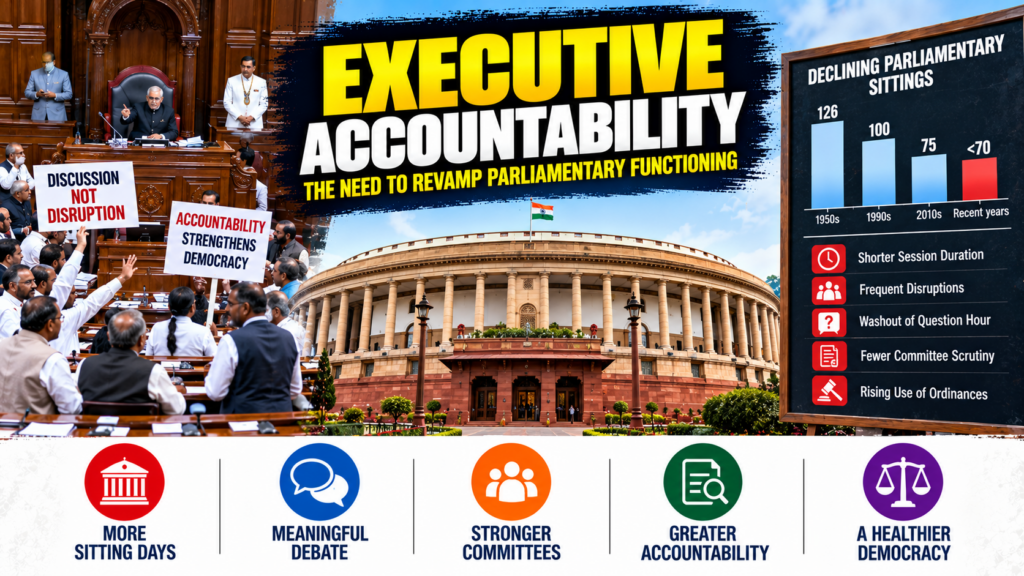
- Shorter Calendars: The average annual sitting days of the Lok Sabha and Rajya Sabha have fallen significantly from over 120–130 days in the early decades of independence to fewer than 70–80 days in recent years.
- Bypassing Question Hour: Disruptions frequently result in the washout of Question Hour and Zero Hour, stripping MPs of the opportunity to orally cross-examine ministers on policy failures.
- Marginalization of Legislative Scrutiny:
- Circumvention of Committees: The proportion of bills referred to Departmentally Related Standing Committees (DRSCs) has dropped sharply, with major economic and national security legislation passed without multi-party scrutiny.
- The “Guillotine” Effect: Compressed session schedules force large tranches of the Union Budget to be passed without discussion or detailed cut-motion debates, diluting financial control.
- Executive Dominance through Ordinances:
- Frequent resort to Article 123 (Ordinance-making power) allows the executive to enact laws unilaterally, reducing Parliament’s role to a post-facto approval mechanism.
- Erosion of Procedural Protections:
- The frequent use of the “Money Bill” route to pass contentious legislation (such as Aadhaar or Tribunal reforms) bypasses the review of the Rajya Sabha, undermining bicameral federal accountability.
Structural Causes Driving Disruptions and Shrinking Sittings
- Executive Control over the Calendar: Unlike Westminster systems with fixed legislative calendars, the Cabinet Committee on Parliamentary Affairs decides session durations, keeping them flexible and brief.
- Absence of Guaranteed Opposition Time: The lack of dedicated, statutory days for the opposition to set the legislative agenda drives disruptions as the only remaining tool to capture national attention.
- The Anti-Defection Trap (Tenth Schedule): Strict party whips stifle internal dissent and backbench debate, reducing floor proceedings to rigid partisan clashes rather than nuanced deliberation.
- Weaponization of Disruptions: Both ruling and opposition parties occasionally benefit from reduced scrutiny—the executive avoids difficult questions, while opposition groups use tactical logjams to score short-term political points.
Path Forward and Institutional Reforms
- Statutory Minimum Sittings: Enact a legal requirement mandating a minimum of 100 to 120 sitting days per year, as recommended by the National Commission to Review the Working of the Constitution (NCRWC).
- Institutionalizing Opposition Days: Allocate specific days each week where the opposition dictates the debate agenda, fostering a culture of structured accountability.
- Mandatory Committee Referrals: Amend rules of procedure to make pre-legislative scrutiny by DRSCs compulsory for all bills, barring exceptional emergency legislation.
- Empowering Presiding Officers: Enhance the neutrality of Speakers and Chairpersons while enforcing strict decorum codes to ensure opposition grievances are heard without gridlock.
|